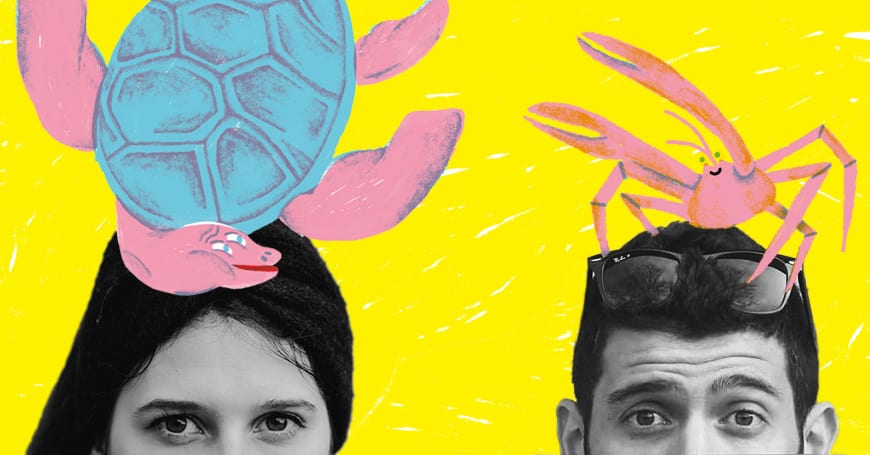
Angelo Mozzillo is the author of the Andersen Prize 2021 with Io sono Foglia (best picture book 0-6 years). Alice Piaggio is among the 20 excellences of the new generation of Italian illustrators for children’s books selected by the Bologna Children’s Book Fair.
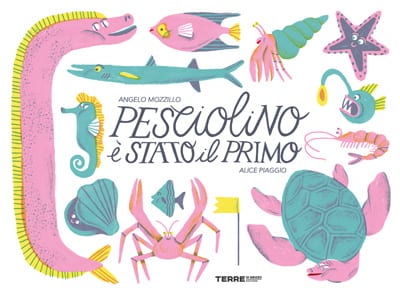
Together, they are the authors of Pesciolino è stato il primo. Here they tell each other, they leaf through the book for us and, to celebrate this summer release, they give us some advice on the “best places” to visit in the cities where they lived!
Angelo, tell us about Alice
The first time I met Alice was in Milan: we were working on the book Il Natale dell’Orco Narice (Edizioni La Spiga), but we only spoke via email and messages. When she showed me some proofs of illustration for Narice I found them perfect: she had caught my desire to make a Christmas book out of the usual Christmas canons. We got along so well that we then wanted to work together again.
Alice, tell us about Angelo
Angelo and I met while we were working together on Il Natale dell’orco Narice, a decidedly eccentric book that combines ogres and Christmas decorations. There was an immediate harmony between us: both emigrated from our hometowns with many projects in the drawer and the desire to make themselves known in the world of children’s publishing.
Pesciolino è stato il primo is new in our catalog. Where did the idea for this story come from and how did you work to make it a book?
ANGELO I seem to remember that the idea came to me in bed a few years ago. Pesciolino woke me up early in the morning and, so as not to lose the idea, I immediately wrote it down on the notes of my cell phone. Then as usual I let it settle. After a few months the text was ready, and I thought of proposing it to Alice. Luckily she liked it – first her and then Terre di mezzo, the publishing house I had wanted to collaborate with for a long time.
ALICE When Angelo made me read the story of Pesciolino for the first time, I found it brilliant. I immediately set to work to create the universe of fish and marine animals that populate the story. I’m glad he thought of me as an illustrator for this book because
Pesciolino is perfectly my thing: simple, but at the same time ironic and fun
How did you meet the world of children’s literature? Which are the authors or the books that have inspired you the most?
ANGELO As a child I only read classics for boys. My uncle brought them to me, they were the editions he had read as a young man. Then I started going to the library next to mine, the only one in the area where I grew up. So I met and loved Twain, Stevenson, Dickens. I got to know the illustrated books very late, when I came across Davide Calì. It was love right away: I realized that the large format and full of illustrations in a book allowed for greater experimentation than a long text. And so I wanted to try too.
ALICE In my bedroom, on the low shelf of my library, there were La Pimpa by Altan, Il libro dei mestieri by Richard Scarry, some “books with holes” of La Coccinella and then, what I call the most absurd and funny children’s books I have never read: the “saga” of I coniglietti Tontoloni by Sue Denim and Dal Pilkey. The irony, the madness, the nonsense that characterizes these books, combined with the study of children’s literature undertaken at the ISIA in Urbino (Higher Institute for the artistic industries) have undoubtedly influenced my way of telling through Images.
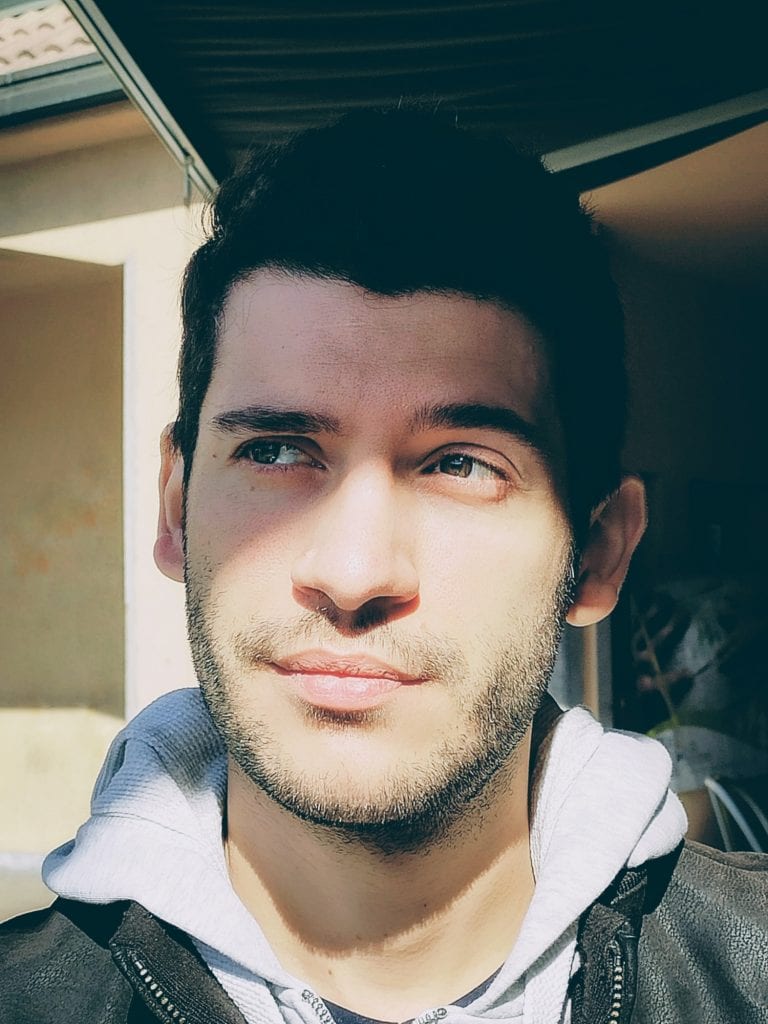
Angelo Mozzillo 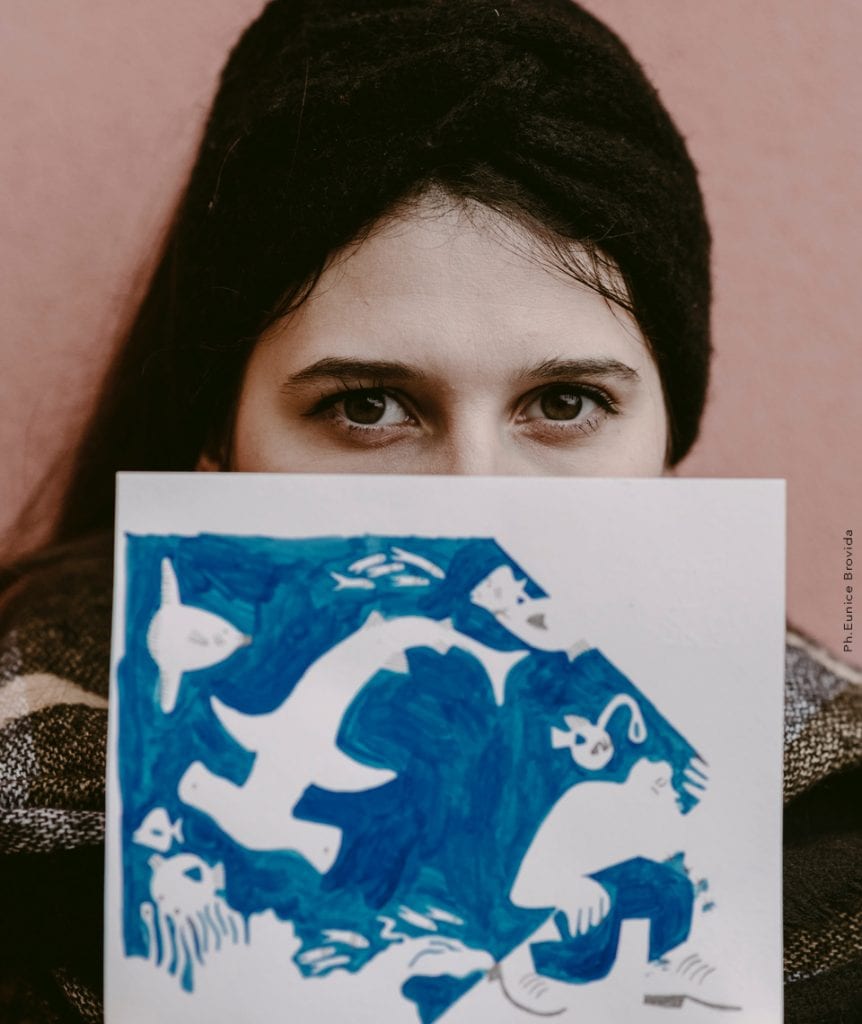
Alice Piaggio
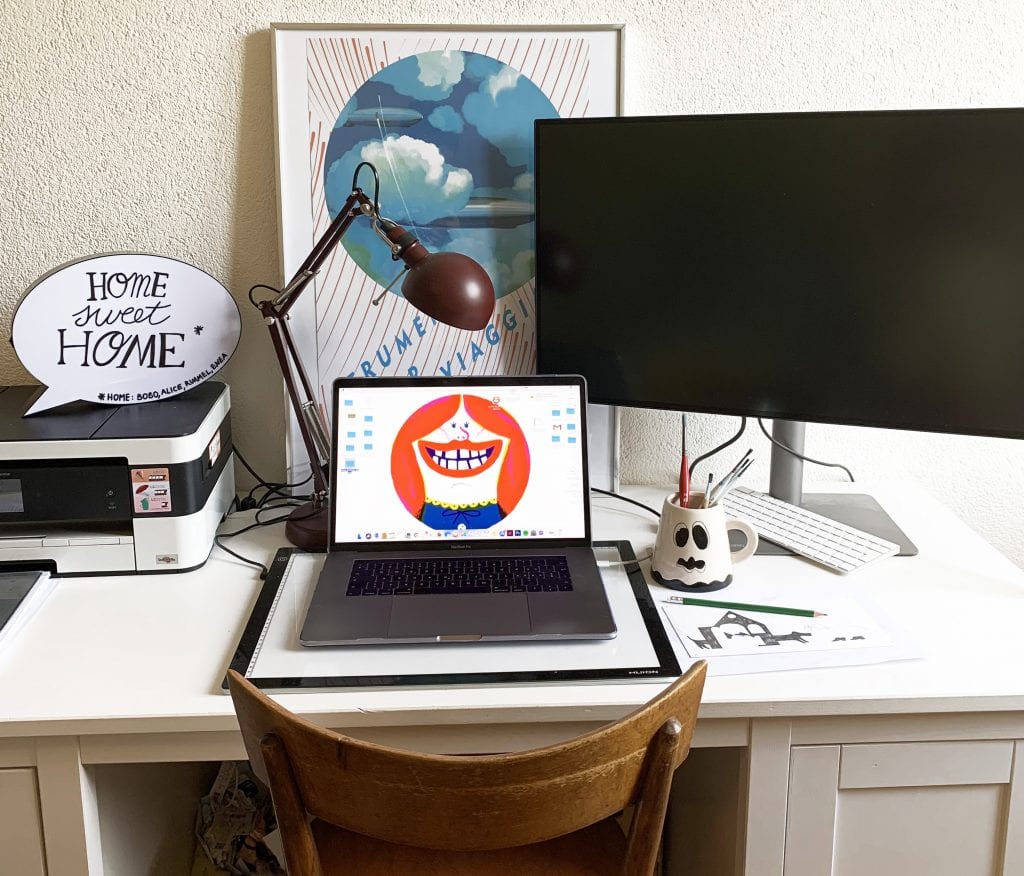
Desk – Alice Piaggio 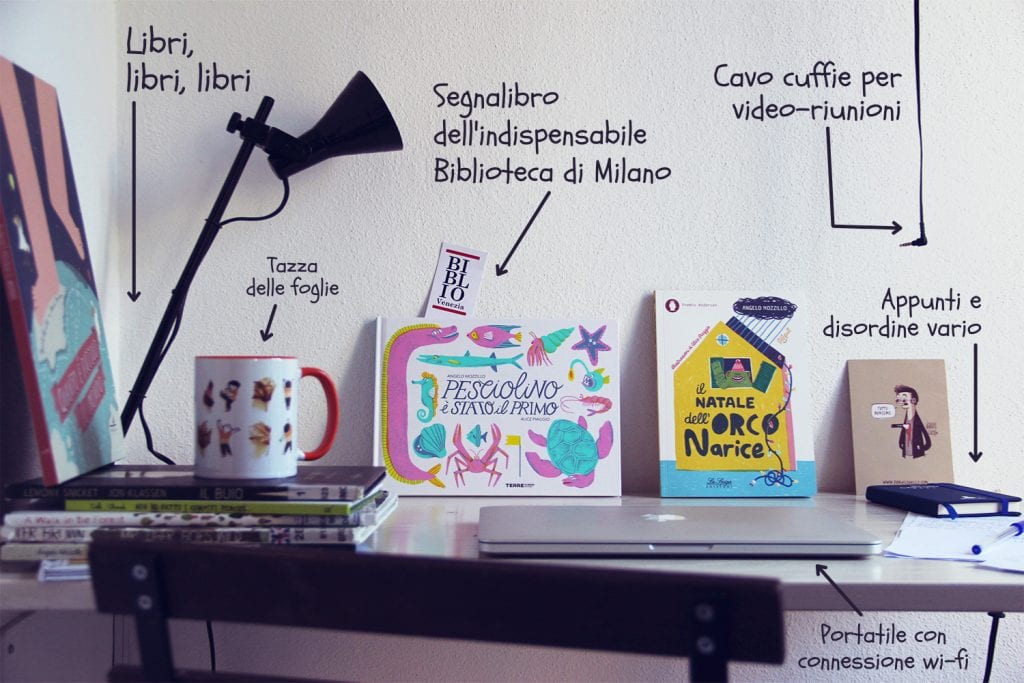
Desk – Angelo Mozzillo
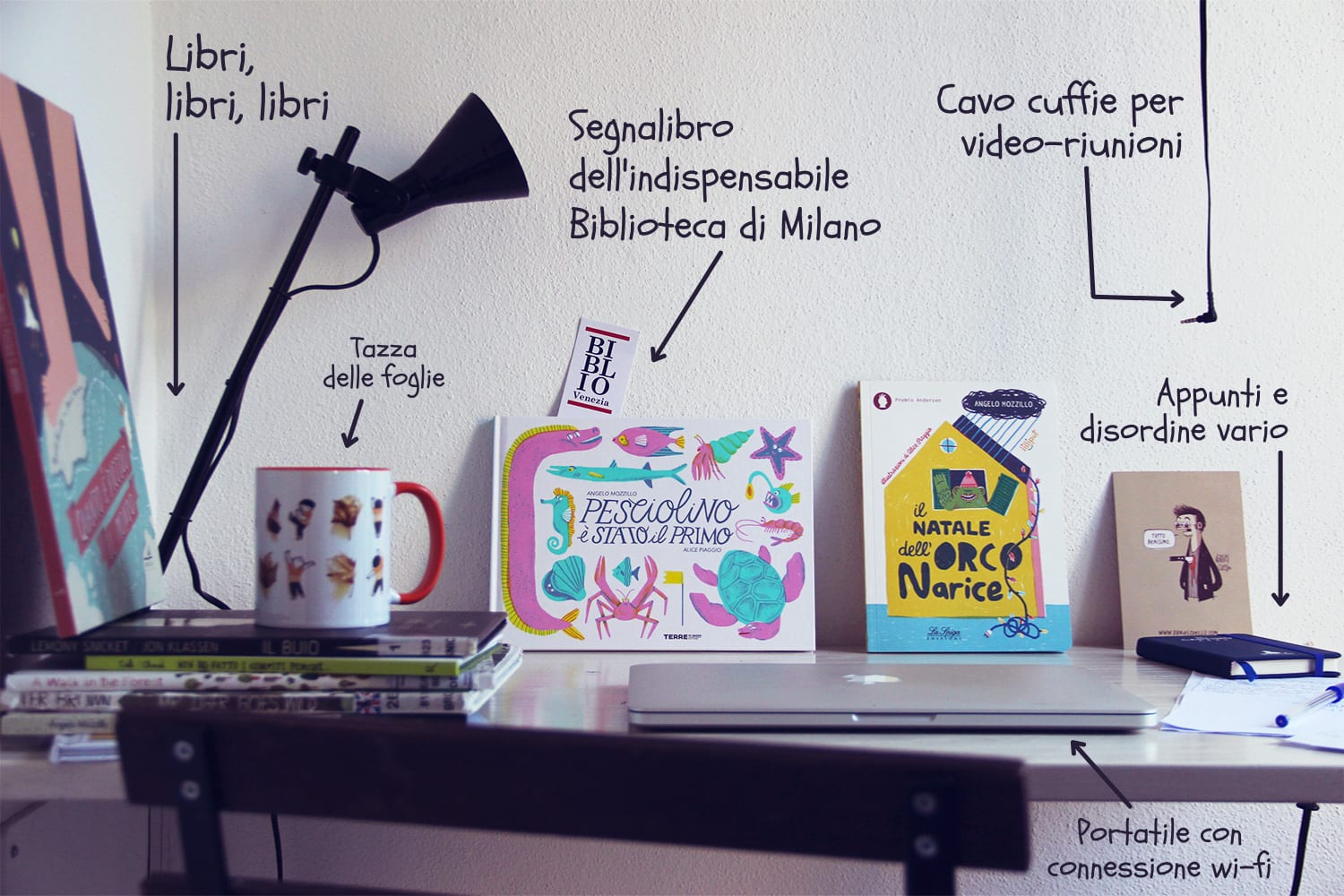
ANGELO, how can we not ask you about the Andersen Prize and Super Prize you just received for Io sono foglia (illustrations by Marianna Balducci, Bacchilega). One thing they haven’t asked you about it yet and you want to say
I am still incredulous about this crazy and unexpected news, also because it came a long time after the birth of that book. The story of “Io sono foglia” in fact began years ago, although it may seem that that little book was made in a short time. In reality, for me every text is the end of a journey, and even when it comes to a few pages, it is usually a job that I carry on in jolts for months and months. In jerks, because a story must have its time of maturation, you have to let it ferment, and then pick it up and rework it where it doesn’t work. And then you have to wait for the opinion of the art director, that of the publisher, the realization of the illustrations, all the time it takes to transform a project into a real printed book, and only at the end can you know how the public will react to all that work.
Being a writer is a profession made up of expectations